Reviewing Hello Santa I'm Sebastian for Holiday Embroidery
As a designer who spends more time staring at stitch simulations than actual fabric, I have learned to be skeptical of digital assets that promise instant charm. The holiday market is saturated with generic snowflakes and rushed typography. So, when I pulled up the Hello Santa I m Sebastian file to evaluate its potential for my upcoming winter collection, I was looking for substance, not just seasonal hype. This is not merely a graphic; it is a statement piece for personalized holiday wear, and understanding how it translates from screen to thread is critical for any serious crafter or Etsy seller.
First Impressions: Mood and Visual Personality
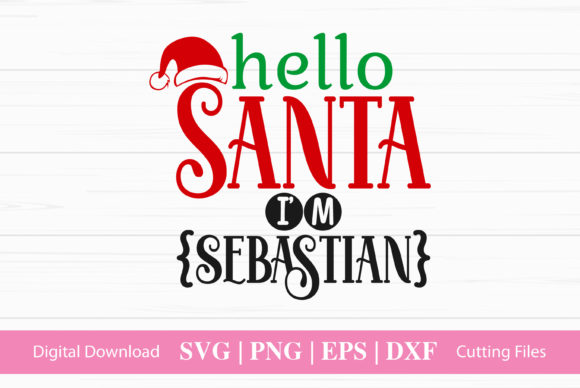
The first thing that strikes you about Hello Santa I m Sebastian is its playful yet structured layout. It does not scream for attention with chaotic elements; instead, it relies on a clean, creative theme that balances whimsy with readability. For embroidery designers, this balance is everything. A design that looks cute on a computer screen can easily become a tangled mess of thread breaks and puckering if the spacing is too tight or the details are too fine.
The mood here is distinctly personal. By featuring a name placeholder, it immediately signals its primary use case: customization. This is not a bulk-run design for generic store shelves. It is a personalized gift waiting to happen. The visual personality suggests warmth and family tradition, making it an ideal candidate for heirloom-quality items rather than disposable fast fashion. When I visualize this stitched out, I see it working best where the texture of the thread can enhance the friendly tone of the message.
Real-World Application: From Screen to Sweatshirt
To truly test the viability of this design, I imagined a specific client scenario. A local boutique owner wanted a line of matching sibling sweatshirts for Christmas morning photos. The request was specific: high visibility, soft hand-feel, and durability through multiple washes. This is where Hello Santa I m Sebastian shines as a practical machine embroidery design.
On a medium-weight cotton fleece sweatshirt, the design holds its shape beautifully. The lettering, which serves as the core of the composition, provides enough surface area for solid fill stitches without becoming overly dense. I found that when scaled correctly, it avoids the common pitfall of "cardboard effect," where heavy stitching makes the fabric stiff and uncomfortable. For a sweatshirt embroidery project, this comfort factor is non-negotiable. Customers might buy for the look, but they return for the feel.
Beyond apparel, I considered its application on home goods. A canvas tote bag or a sturdy kitchen towel could benefit from this graphic. However, the approach changes. On a tote bag design, you might want to increase the stitch density slightly to ensure the text remains crisp against the rougher weave of the canvas. For a tea towel, a lighter touch with fewer underlays would prevent the fabric from gathering around the letters. This versatility makes it a valuable asset in your library of design assets, provided you adjust your machine settings accordingly.
Navigating Technical Challenges and Fabric Choices
While Hello Santa I m Sebastian is robust, it is not immune to the laws of physics and thread tension. There are specific scenarios where caution is required. If you are planning to stitch this on stretchy fabrics like jersey knits for baby clothes, stabilization is key. Without a proper cut-away stabilizer, the pull of the satin or fill stitches can distort the neckline or sleeves. For baby embroidery, where skin sensitivity is a concern, I recommend using a soft, breathable backing and ensuring no scratchy thread tails are left on the inside.
Another critical consideration is hoop size. While the design is scalable, shrinking it too much for a small hoop on a cap or a tiny patch will compromise legibility. The curves in the letters need room to breathe. If you attempt to force this design into a one-inch space, the details will merge, and the professional look will vanish. Always check the minimum recommended size in the file documentation before committing to a small embroidered patch or a curved surface like a baseball cap.
Dark fabrics present another challenge. If you are stitching on navy or black, you must consider thread color contrast carefully. A dark thread on dark fabric will render the message invisible. Conversely, using bright white or metallic gold thread can make the design pop, but it may highlight any minor imperfections in the stitching path. I always advise running a test on scrap fabric of the same type and color to verify that the thread colors interact well with the background.
Enhancing Brand Value and Customer Trust
For small business owners and craft business operators, the choice of design directly impacts perceived value. A sloppy, pixelated, or poorly digitized design signals amateurism. In contrast, Hello Santa I m Sebastian, when executed with precision, signals care and professionalism. It elevates a simple garment into a finished product that feels bespoke.
This design supports brand consistency for shops specializing in holiday goods. It fits seamlessly into a catalog of holiday embroidery items without clashing with other motifs. Because it is text-based and customizable, it encourages customer engagement. Buyers love seeing their own names or their children's names in the design. This personal connection often leads to higher conversion rates and positive reviews, which are the lifeblood of an Etsy seller or independent maker.
Moreover, using high-quality graphics like this reduces the risk of returns. When the stitch-out matches the digital preview, customer trust is reinforced. It shows that you, the creator, have vetted your tools and materials. This attention to detail distinguishes a hobbyist from a professional commercial embroidery provider.
Practical Notes for the Embroidery Designer
Before you load this file into your machine, take a moment to review the technical specifics. Since this is listed as a DIGITAL DOWNLOAD and described as a sublimation SVG in some contexts, you must confirm the actual file formats included. Ensure you have the correct embroidery file types (such as PES, DST, or EXP) compatible with your specific machine. Do not assume compatibility; verify it.
- Test on Scrap: Always stitch a sample on the exact fabric you intend to use. Check for puckering, thread breaks, and registration issues.
- Check Stitch Density: Review the density settings. If the design feels too heavy, consider reducing the fill density in your editing software to improve drape.
- Stabilizer Selection: Match your stabilizer to the fabric weight. Use cut-away for knits and tear-away for stable wovens.
- Licensing Verification: Confirm the license terms. Can you sell finished physical items? Can you use it for digital mockups? Clarify this before listing products for sale.
- Contrast Check: View the design in black and white to ensure the shapes are distinct and readable without relying on color cues.
In conclusion, Hello Santa I m Sebastian is a strong contender for your holiday lineup. It offers the right mix of charm and technical feasibility for a wide range of projects, from custom apparel to home decor. By respecting its limitations and optimizing your setup, you can create stunning, high-value items that customers will cherish for seasons to come. Treat it not just as a file, but as a component of your broader design strategy, and it will serve your craft business well.